Why You're Researching Tools Instead of Building Things
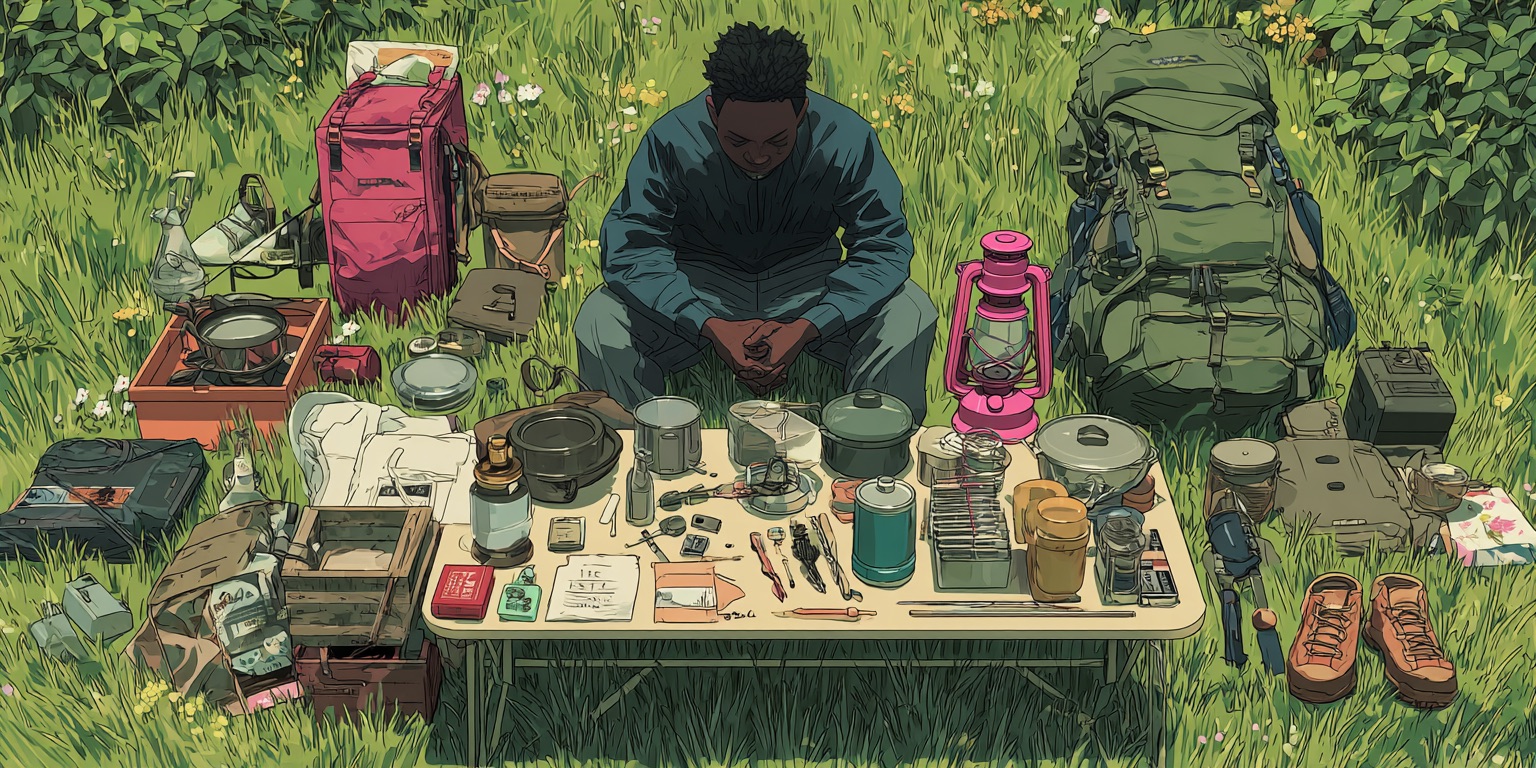
Humans have a remarkable ability to turn the pursuit of a goal into an obsession with the tools required to reach it — and to somehow feel productive the whole time.
I've been guilty of this in self-help. At various points I've had the journals, the morning routine, the color-coded Notion system, the podcast queue stacked with productivity content. And I know I'm not alone — this is basically its own genre of consumption. The goal was to live better. The activity became optimizing the system for living better. The actual living — still pending.
Same thing with hobbies. It's called Gear Acquisition Syndrome, and I've felt its pull there too. The itch to research the next thing, the upgrade, the setup that'll finally make the pursuit feel right. The cyclist who spends more time on bike forums than on a bike. The home cook who's got every All-Clad pan but only makes pasta. The photographer who knows every lens spec but rarely shoots. The gear becomes the hobby. The pursuit becomes a prop.
And now I'm watching it play out in the AI builder community — the people actually making products with large language models, not just talking about them. There's been a genuine light bulb moment in this space: these tools are powerful for knowledge work, in a way that changes how you think about what's possible. That's real. I've felt it.
But something happens after the light bulb. Instead of building, you start optimizing. Which model should I use? What's the right prompting strategy? Have I tried this new framework? Is my architecture wrong? The tools become the obsession. The thing you were actually trying to build slips quietly into the background while you stay very busy feeling productive.
The pull is especially strong here because the landscape genuinely does move fast. There's always a new model, a new technique, a new benchmark. The FOMO is real and not entirely irrational. But I've learned to recognize the feeling — that same feeling as buying another journal — and treat it as a warning sign rather than a to-do.
The reminder I keep coming back to is simple: the tools are not the point. The point is what you're building, and who it's for, and whether it actually helps them. The tools will keep improving whether you're watching or not. The thing you're building won't build itself.
The work is the work.